Write Track
Writing coaching for scientists
Do you struggle to write?
In science, it’s often said that if it’s not communicated, it wasn’t done. As scientists, the vast majority of what we do is writing; yet many of us struggle to communicate our ideas clearly in writing. At best, this makes our work slow, laborious, and painful, robbing us of some of the joy of discovery. At worst, it results in negative paper reviews and failure to secure grant funding.
Do you identify with any of these issues?
I feel like writing is an obstacle, and it takes forever to write anything
I lack confidence in my writing
I don’t know how to start writing
I don’t know when to stop writing
I can't seem to get my reviewers to be as excited about my great ideas as they should be
I find myself asking whether reviewers have even read my proposal / paper
You’re not alone!
Science writing is a skill, and it’s one that few of us are taught. We are often forced to learn by trial and error; but if you’re a scientist in today’s academic landscape, you don’t have time for trial and error.
We can help!
At Write Track, we offer live, instructor-led courses that will help give you the tools you need to communicate your science effectively.
If you’re ready to learn useful skills that will help you break the cycle of frustration and make writing less painful—and, dare we suggest, even enjoyable—then Write Track is here for you.
CURRENT COHORT: FALL 2026
Getting your message across
A proposal-writing bootcamp for early career researchers


NEW FOR
FALL 2026!
From idea to submission
How to develop a research proposal
COMING SOON
Publish without perishing
How to write a journal article


Getting your message across:
A proposal-writing bootcamp for early career researchers
Are you an early-career researcher learning to navigate the funding landscape?
Have you received panel reviews that left you wondering whether the reviewers even read your proposal?
Do you wonder what you can do to give your ideas the best possible shot at being funded?
If questions like these sound familiar, this proposal-writing bootcamp might be for you.
A proposal is a story
Our job as proposers is to tell a story; and that story has to be one that the reader can understand.All too often, proposers bury the vital elements of their stories somewhere in the depths of the proposal, asking the reviewers to work hard to discover them. Or they include far too much detail about basic concepts while glossing over the key details; or jump into the middle of an argument that is incomprehensible to reviewers who are not as familiar with the specific topic as the proposal writer.

This leaves reviewers feeling exhausted and annoyed, and often leads to a low score.
Make the reviewers happy

By contrast, a proposal that leads the reviewer step by step from problem to proposed solution to perceived impact is much more likely to leave the reviewer feeling that they understand the proposal. And this leaves them feeling satisfied.
In the best case, it leaves them feeling excited and inspired!
Clarity is the key
Clearly, there are no guarantees in this business — but leaving reviewers happy is much more likely to result in a high score than leaving them exhausted and annoyed because they can’t understand what the proposal is trying to say.
A True Story from Write Track's founder
A few years ago, I was on a review panel in which we had several proposals from self-described early-career researchers. One such proposal was chock full of good ideas and solid methods; but it was very confusingly written.Some of the panel members took the time to review it thoroughly, reading it more than once, and teasing the message out of the text.But some didn’t.One of the primary reviewers read it once, didn’t understand it, and gave it a very low score. During the discussion, the rest of the panel tried to convince this reviewer that the proposal actually had merit, but in the end, the aggregate score pushed it into unlikely-to-be-selected territory.
I felt very frustrated by this situation: had the proposal simply been clearly written, the outcome might have been very different.
I decided that I could help: and the idea for this bootcamp was born.
How does the Getting Your Message Across boot camp work?
Each boot camp cohort works together for six weeks.
Two weeks before the start of each boot camp, all participants submit a five-page proposal draft. As your instructor, I do an initial reading of each proposal, and tailor the course exercises to the specific issues I observe.
Each week, we meet for a two-hour live video call.
During these calls, we review key concepts, such as proposal organization, paragraph structure, etc. We also participate in exercises created specifically to help us practice the skills we need to improve the clarity of our writing. Finally, we discuss the previous week's homework, which leads us to the next point:
There is homework!
Each week, participants either: read and comment on one or more fellow participant's current draft proposal, focusing on the concepts we covered that week; or revise their own draft proposal based on comments from both the instructor and fellow participants.One week after the final live session, participants submit a final draft to me, and I return it with final comments no more than three weeks after our last live session.
This is a collaborative effort.
The success of this course depends on full engagement by all participants. Therefore, we expect all participants to attend all sessions and to complete all the homework assignments.At the end of the course, participants will have:
Learned how to craft a clear, compelling proposal that is a pleasure to read and review
Gained fundamental writing skills that are transferable to any form of science writing, including journal articles, job applications, and more
Gained confidence in their ability to tell the story of their ideas
Learned how to give review comments that are constructive, honest, and kind
Worked with their colleagues in a supportive and uplifting collaborative learning environment
Click here to see what previous participants have said about the Getting Your Message Across boot camp
Get in touch to be notified of the next cohort!

From idea to submission: How to develop a research proposal
Can you relate to any of these scenarios?
You're a senior graduate student, and your supervisor suggests that you apply for a competitive fellowship that requires a 6-page proposal for original research. You have an idea, but feel overwhelmed at the notion of turning that idea into a proposal. How do you know if the idea represents a "good problem?"
You're a postdoctoral scholar, and your supervisor-provided support only covers your time for the next two years. You need to start thinking about how to bring in your own funding in order to remain in the field, and to be competitive for permanent positions. How do you establish a niche for yourself when you've only published a few papers?
You're a new professor, and in order to be able to hire graduate students or postdocs, you have to produce significant external funding. How do you translate that body of half-finished work in your "projects" folder into competitive grant proposals?
You're a soft-money researcher, and you're responsible for your a large fraction of your own support. How do you keep up with the proposal-writing cycle without getting burned out?
Many of us have been through the painful process of developing proposals by trial and error. This is one of the most important skills we can develop as researchers—yet seldom are we taught to think about the process in a systematic, reproducible way.
Fortunately, you don't have to figure it out on your own.
In the From Idea to Submission course, you will learn to:
Find and articulate the "research gap" your work will address
Formulate a project with an appropriate scope
Link your project ideas to priority research areas
Create a logical framework for the research
Translate your research goals into actionable tasks
Maintain traceability from big-picture research goals to proposed deliverables
What sets the From Idea to Submission course apart?
This is an eight-week, instructor-led, collaborative course.
From Idea to Submission is a comprehensive, practical exercise in the art of proposal development. Through weekly two-hour live sessions and out-of-class assignments, you will acquire a toolbox of techniques and skills that will allow you to tackle proposal writing from a position of knowledge and agency, rather than one of uncertainty.
In each week's live session, we cover a different aspect of proposal development, complete illustrative exercises, and discuss the previous week's homework assignment.
Peer review is a critical element of this course.
In addition to weekly instructor feedback, you will both give and receive at least one peer review each week, focusing on the current week's topic. Our experience has shown that peer review is an invaluable tool for learning how to create effective proposals. In this course, you will act both as author and reviewer, mimicking the real-life proposal life cycle. This vital dual perspective is critical in learning to create proposals that flow logically and communicate effectively.
At the end of the course, you will have learned to:
Identify strategic knowledge gaps
Translate ideas into research tasks with clear outcomes
Articulate and communicate the significance of their proposed work
Use figures and other graphical elements effectively
Give review comments that are constructive, honest, and kind—including to yourself
Get in touch to be notified of the next cohort!

Publish without perishing: How to write a journal article
This course focuses on writing a peer-reviewed article, and covers:
How to know when you’re ready to start writing
How to know when to stop writing
How to start writing
How to use figures effectively
How to deal with reviews
About me
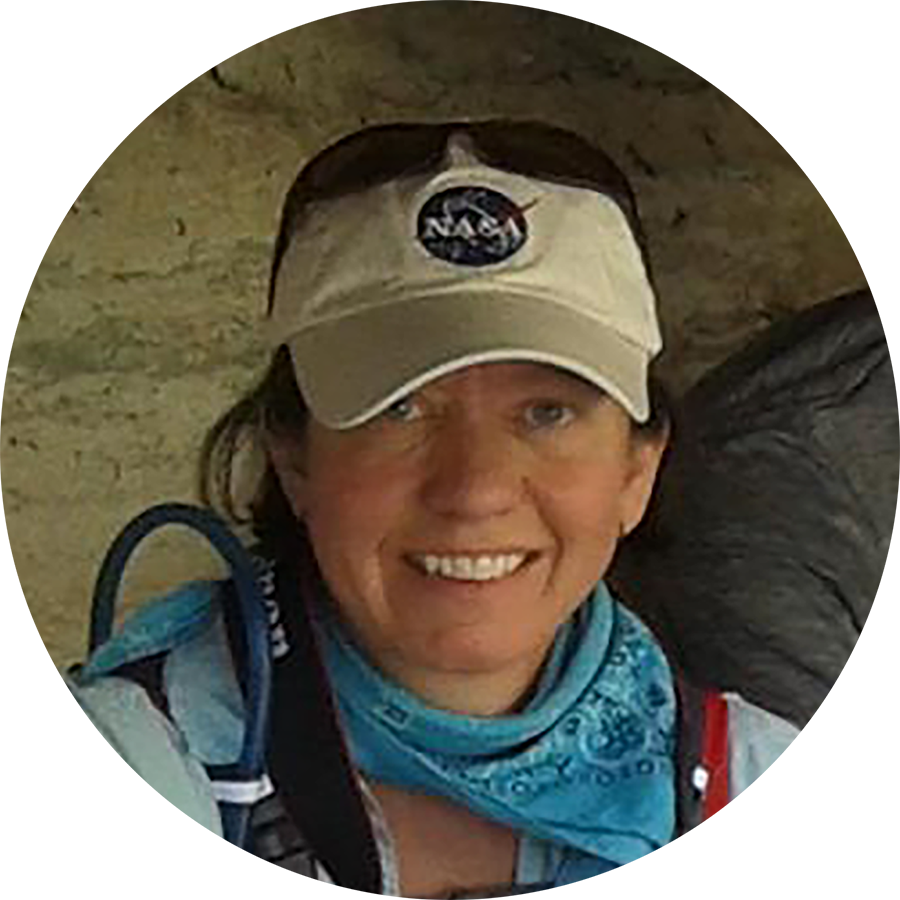
Write Track Coaching was founded by me, Dr. Rebecca Ghent. I have been working in the field of Earth and Planetary Science for 25 years, and I was a university professor for 14 of those years.I have been a student; a postdoctoral fellow trying to establish myself as an independent researcher; an overworked new faculty member navigating the simultaneous demands of teaching, establishing a funded research program in a new country, and professional service; a tenured faculty member focused on keeping funding flowing to my research group; a full-time soft-money researcher living entirely on grants, without institutional salary support; grant proposal and journal manuscript reviewer; and review panel member.In inhabiting these roles, I have read, reviewed, and written thousands of pieces of scientific writing. I have also experienced all the struggles with writing blocks, frustrating reviews, and the feeling that writing takes far too long, when time is always of the essence. On the other end of those 25 years’ experience, I have learned how to write clearly, how to know when I’m ready to write, and that scientific writing can actually be quite fun!
I’d love to show you what I’ve learned. Join me for a course!
Contact Write Track
Sign up to be notified about the next available course, ask a question, or send a friendly greeting!
Praise for
Getting your message across:
A proposal-writing bootcamp for early career researchers
“This course exceeded my expectations and I can't recommend it enough. As a fifth year PhD student who is new to the world of proposals, this course completely changed the way I see proposal writing and I feel a lot more confident in understanding the demands of different proposal sections. This course struck a perfect balance between lecture time, critiquing others' proposals, and receiving feedback on my own writing. The open, collaborative atmosphere also made space for free discussion, where no one was intimidated to speak up or participate. The weekly workload was well-calibrated too — assignments let us apply each week's lessons directly to our own proposals, without ever feeling excessive, typically taking about an hour to complete.” — PhD student
“I feel more confident that my future proposals will be clearer and better organized because of what I learned in this course” — PhD student
“I have previously struggled to edit my own work, but the course gave me the tools to break down each element in a way that made editing my own writing much easier” — Postdoctoral scholar
“I loved the course and found it very valuable!” — PhD student
“All in all it was a really great course! I think you did a great job at showing us the fundamentals of proposal writing and presenting it in a clear way. I have a few more proposals on my immediate horizon, which a few months ago seemed really daunting... But now I feel like I have an action plan for starting them, and a strategy to revise them until they're submittable” — PhD student
“I feel more excited about writing. I tended to dread the writing phase of my work, but now I’m eager to apply my new skill set to the writing exercise” — Postdoctoral scholar
“Thanks again for teaching the course! This is such a vital skill to our career after grad school” — PhD student
What about AI?
Why not just use LLMs to turn a rough idea into a proposal or article?
At Write Track, we do not advocate for the use of LLMs to write proposals or journal articles. Our mission is to empower participants to formulate and clearly express scientific ideas and results. This represents an invaluable set of skills that goes far beyond language. The act of writing is an integral part of the thought process.
We develop our thoughts as we write.
Write Track courses teach participants to use an iterative thinking-writing-thinking process to refine ideas, identify logical gaps, and address technical weaknesses. The result is a well-conceived, scientifically rigorous, and clearly communicated proposal or article. Moreover, the writing process fosters intellectual growth and scientific maturity.
Learning to write well is really learning to think well.
Learning effective scientific writing techniques is an investment in professional development, like a course in a specialist area—but with more far-reaching and generalizable results. Ceding writing tasks to LLM tools is akin to refusing to learn calculus or biology or any other critical component of our specialist fields; just as we wouldn’t advise skipping foundational education in scientific specialties, we don’t endorse outsourcing writing rather than learning to write.
What about short deadlines? Wouldn’t it be faster to use LLMs?
Even when you need to write something quickly, using LLMs instead of original writing is ultimately counter-productive. Using an LLM at the start of writing tends to influence our thought process, because it prompts us in a particular direction. It leads to more predictable, less creative thinking. The result is writing that lacks the spark of originality that gets proposals through panels with high scores.Using LLMs to refine language at the end of the process produces writing that sounds superficially good, but lacks both individuality and, often, the nuance required to fully capture the ideas we’re trying to communicate. Authenticity is just as apparent and compelling in scientific writing as in literature.
The gold standard for a piece of scientific writing is clarity and originality of expression, representing clarity and originality of thought. This is best achieved by unique human minds, not LLM tools.